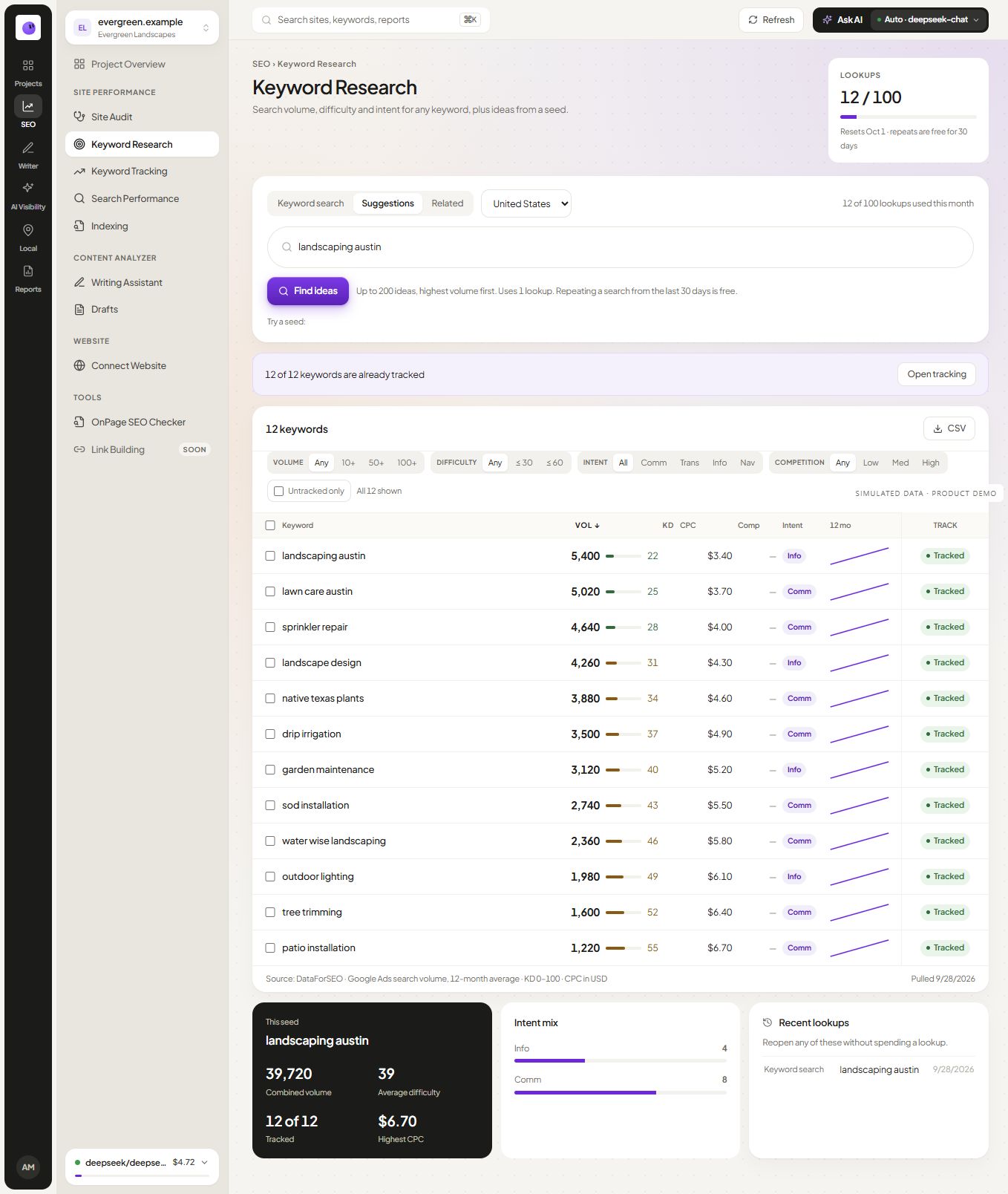
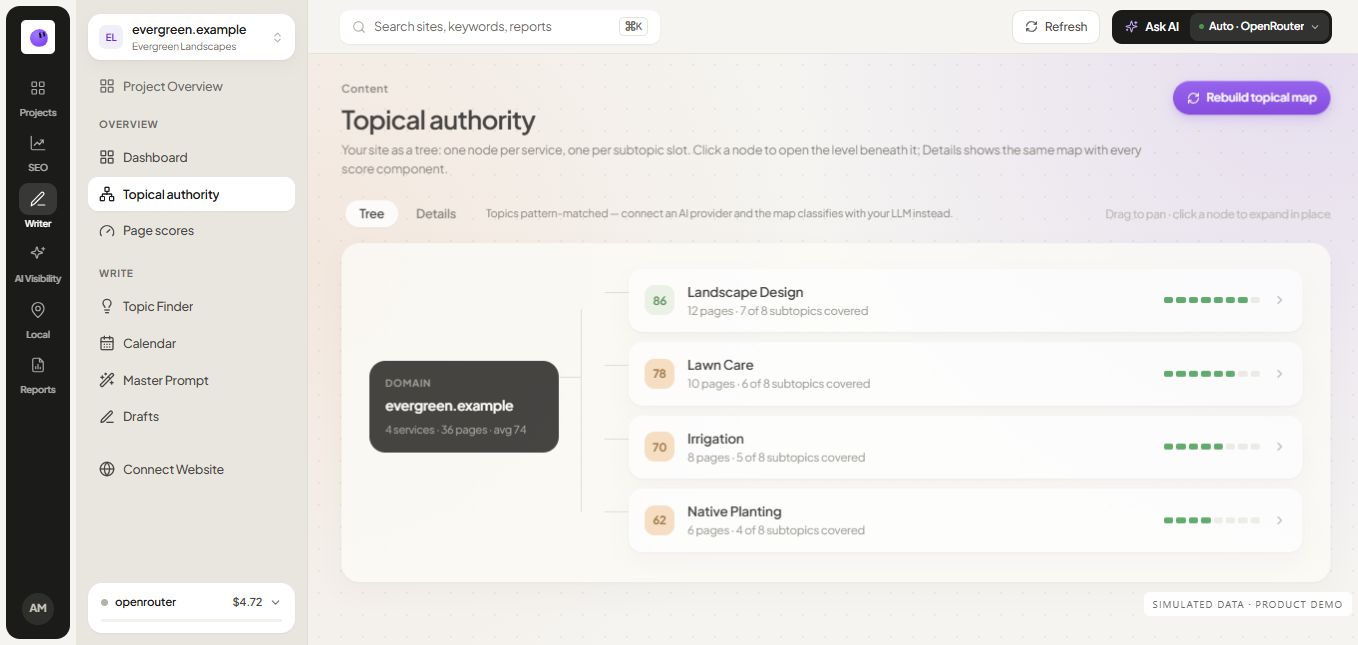
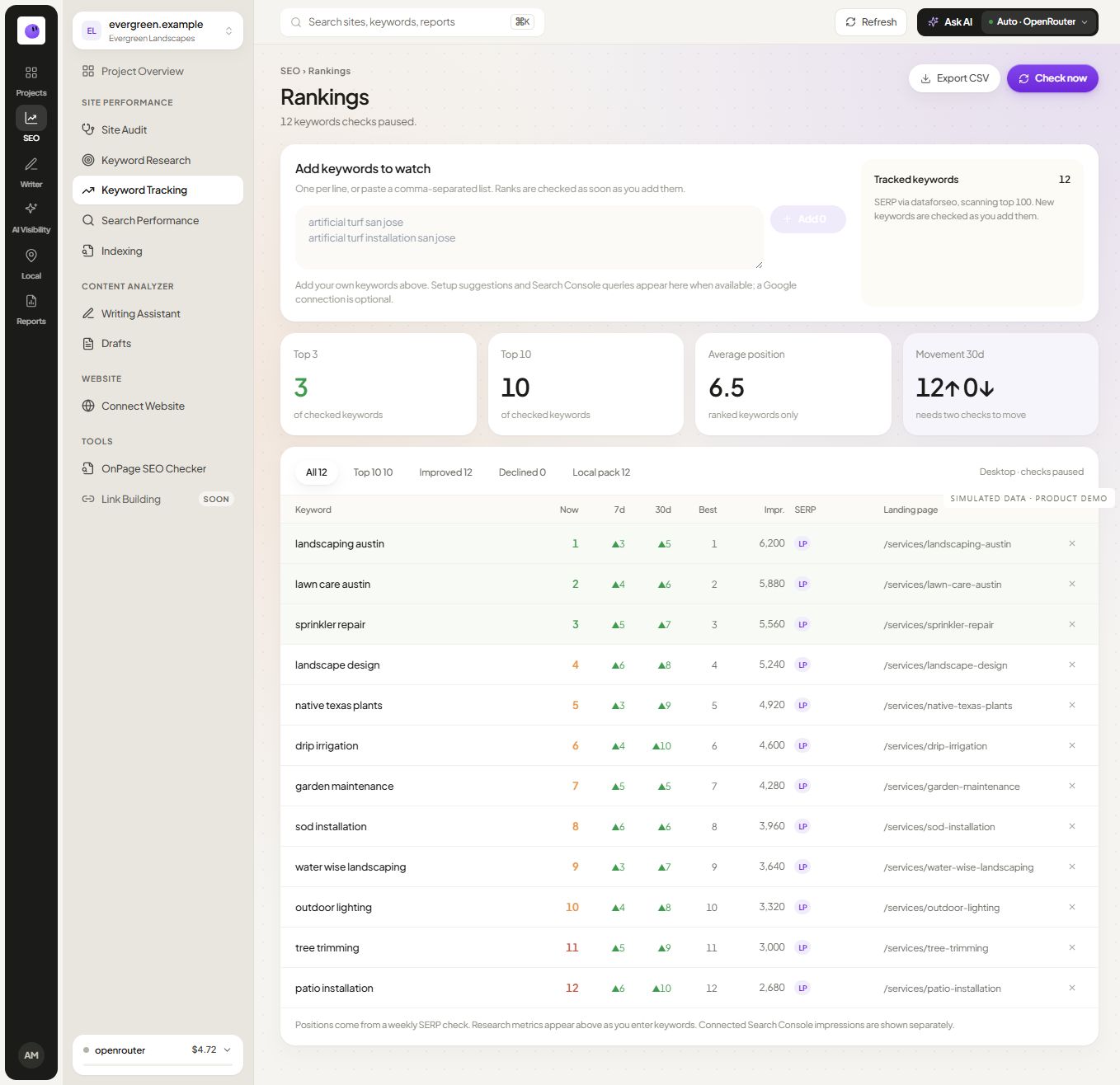
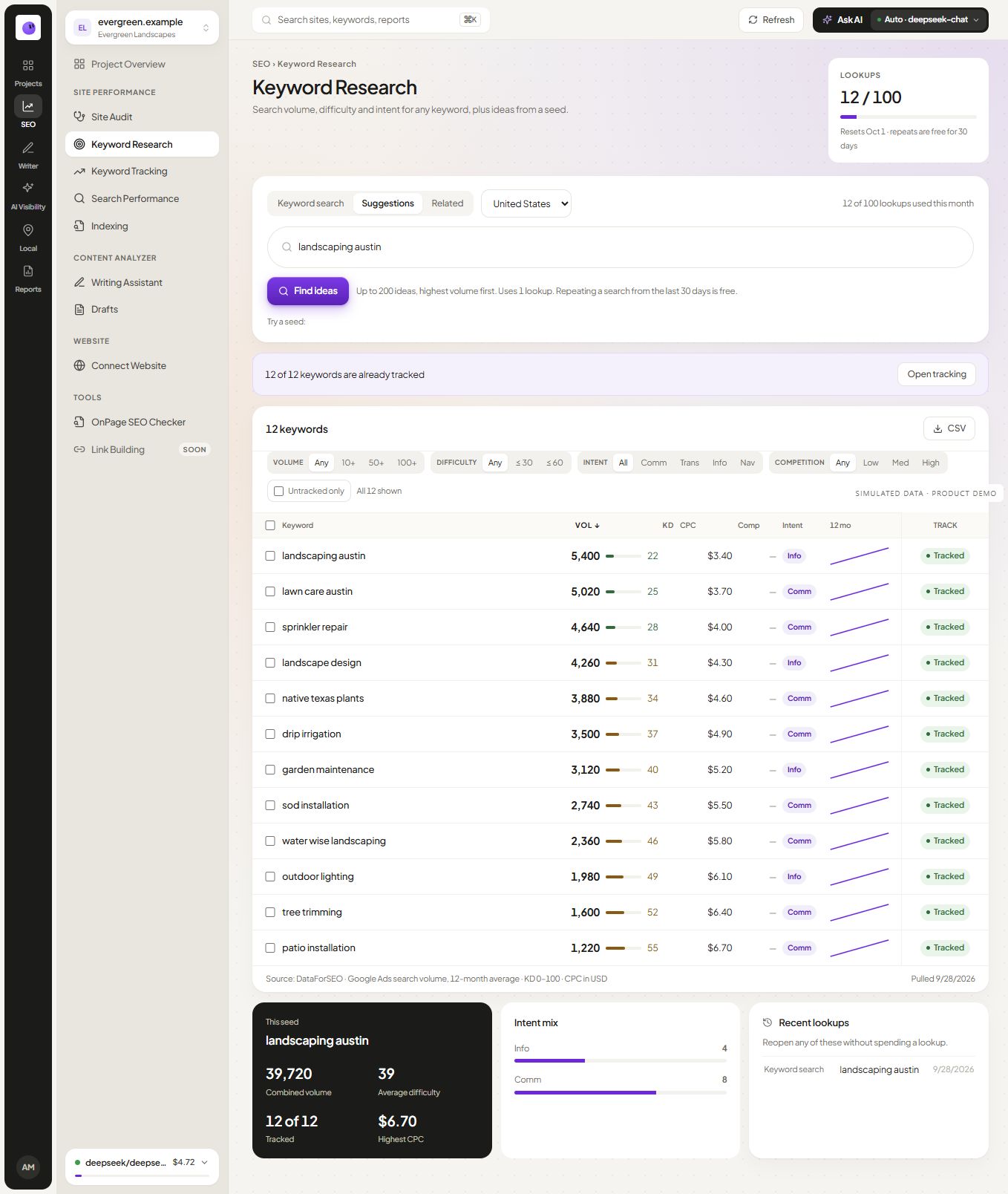
Explore keyword research · Plan a topic structure
Start with the offer and the reader
Write down the products, services or problems that define your business. Use those subjects as starting points for research. A keyword is useful when the resulting visitor would find a credible answer or relevant action on your site.
For a reporting product, report templates and agency reporting workflows may be relevant. An unrelated high-volume topic may attract visitors with no reason to use the product. Evaluate that difference before committing writing or development time.
Read metrics together
Search volume estimates indicate demand in a particular market. Difficulty estimates describe a tool's view of competition. Intent helps explain what the searcher wants. None of those measures, on its own, predicts the traffic or customers your page will earn.
Preserve country and date context when comparing terms. A global total can contain demand from markets with different languages, purchasing behavior or result pages. Do not substitute it for a local estimate without explaining the difference.
Map a cluster to the right page
Close wording variations often belong together. If several terms describe the same task, a single useful page can address them naturally. Inspect the results and reader need before creating another URL.
| Reader need | Likely page format |
|---|---|
| Complete a quick check | Working tool with understandable output |
| Use a repeatable document | Downloadable template and filled example |
| Learn a process | Step-by-step guide with verification |
| Compare products | Evidence-based comparison with a disclosed method |
This mapping connects research with execution. The content brief workflow helps turn the selected intent into an article or page specification.
Prioritize a manageable next batch
Balance business relevance, available evidence and implementation effort. A useful improvement to a page already earning impressions may be a better first task than a large new tool. Record why the opportunity matters and what would show that the page serves the intended audience.
Use the content calendar to schedule work after that decision. A calendar should reflect editorial capacity and product readiness rather than automatically publishing every suggestion.
Distinguish keyword difficulty from advertising competition
Keyword difficulty and paid-ad competition are different measurements. A high advertising bid can indicate commercial interest without proving that an organic result is difficult to earn. Record the metric's source and market so the team does not mix definitions across providers.
Use estimated monthly volume to compare relevant opportunities, then inspect seasonality and the live result format. A low-volume query with a clear buying decision can be more useful to a specialized product than a large unrelated topic.
Turn several phrases into one page assignment
Consider the illustrative group “monthly SEO report template,” “SEO reporting template” and “SEO report example.” If the results and reader task align, assign them to one template page with a filled example. Keep the broader reporting method on a guide and software selection on a comparison page.
Record a primary intent, supporting questions, existing destination and evidence needed. This makes a keyword list usable without creating a new URL for every plural, synonym or adjective.
Frequently asked questions
Does low difficulty mean a guaranteed ranking?
No. Difficulty is an estimate from a third-party model. The actual results, page quality, competing sources and your site's relevance still matter.
Should each keyword have its own article?
Create a separate page when the reader's task and supporting content are distinct. Group close variants when they can be answered well by the same page.
What should I record with an opportunity?
Keep the keyword, country, source date, intended reader, target page, evidence required and next action. That makes the research usable by a writer or developer.