Start with the page that matters
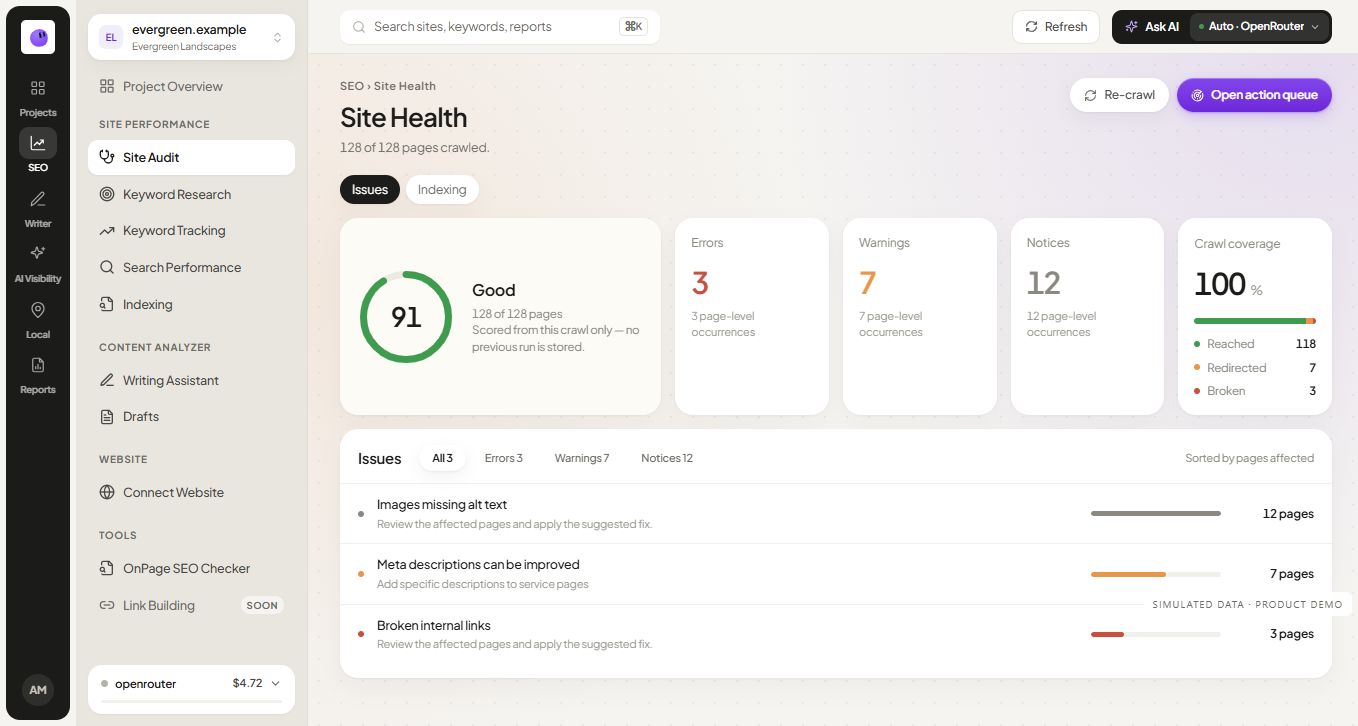
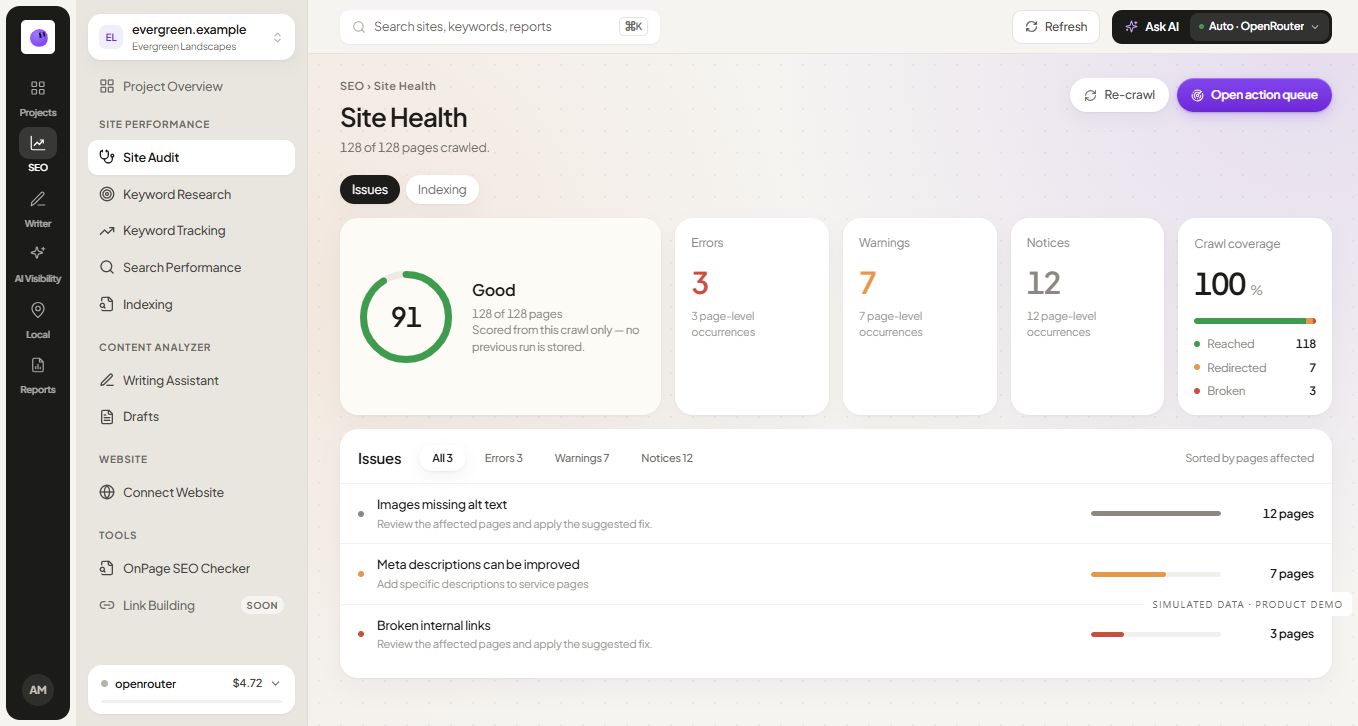
Choose a service, product or signup page before reviewing the issue list. Record what a successful visit should produce. Then inspect the page's search performance and the findings from your website audit.
A blocked lead page and a repeated description on an archive deserve different priorities. Work from the affected URL and the visitor's task.
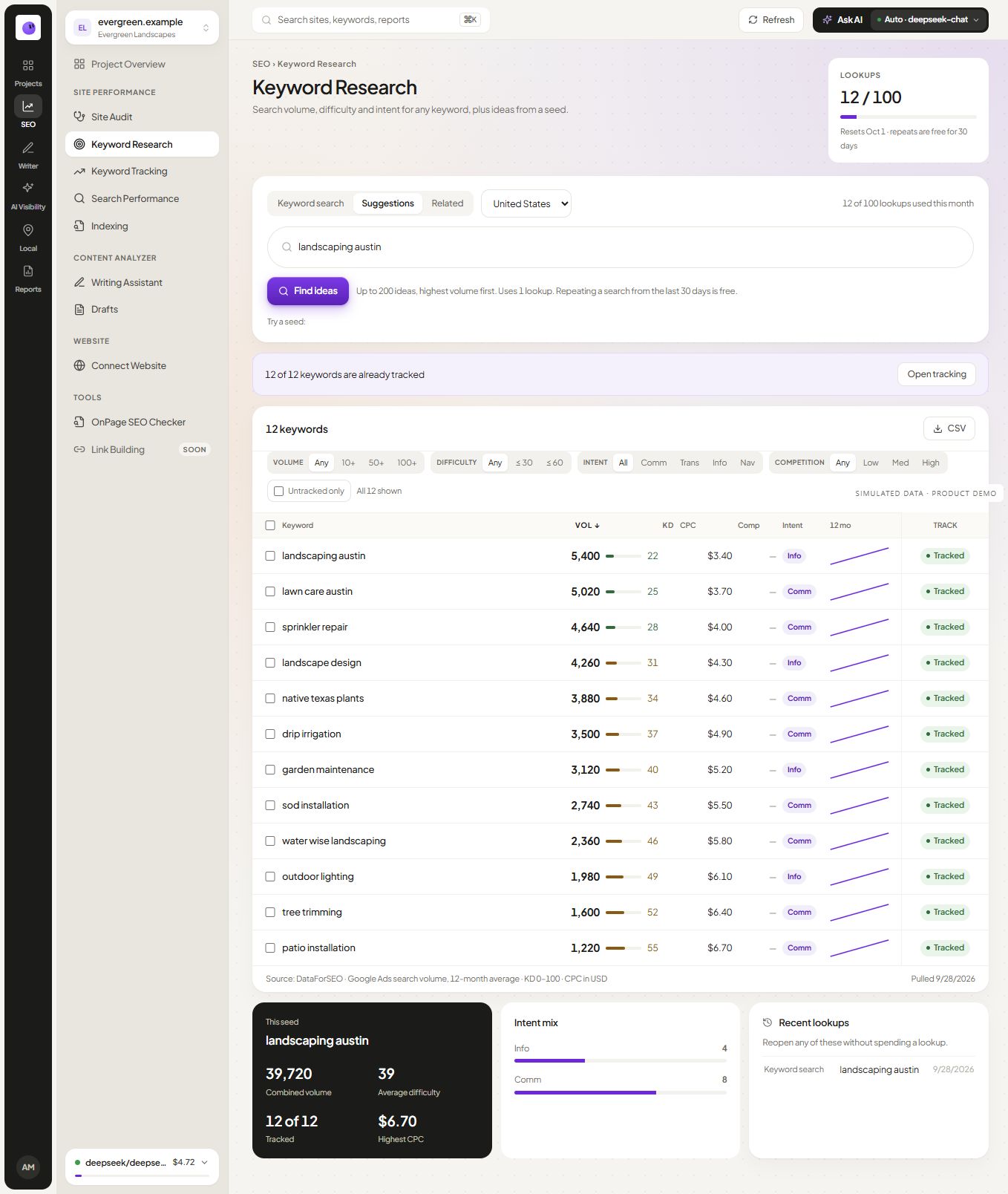
Use research to decide what belongs on the page
Keyword research can reveal the language people use, but a variation does not automatically need a new URL. Group queries that ask for the same thing. Separate pages when their purposes differ enough to justify distinct content.
Make the change testable
Write down the existing behavior, proposed change and expected result. For a broken navigation link, success means the link reaches the correct destination. For a content update, check whether the page actually answers the missing question before waiting for search data.
Follow through after implementation
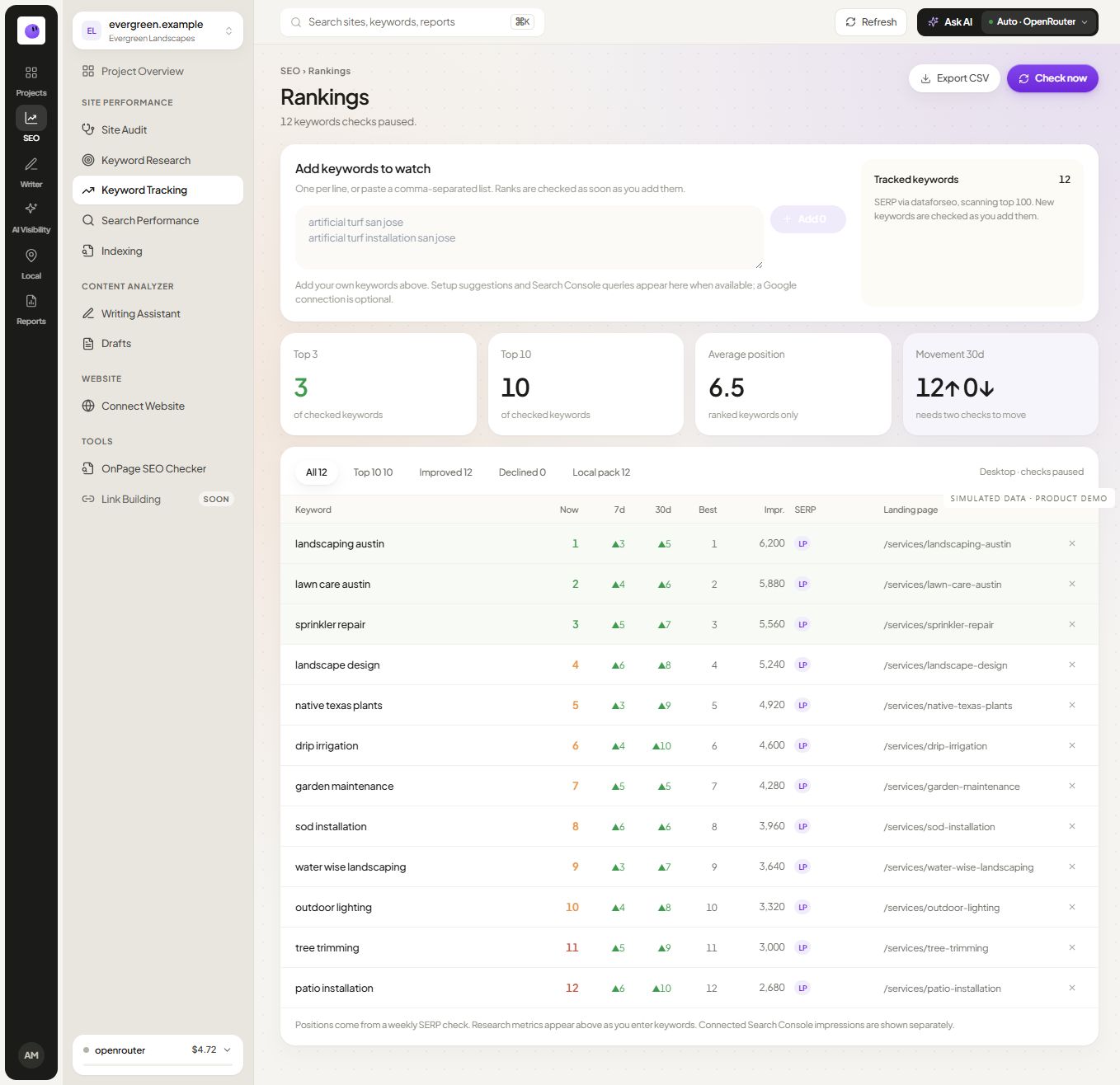
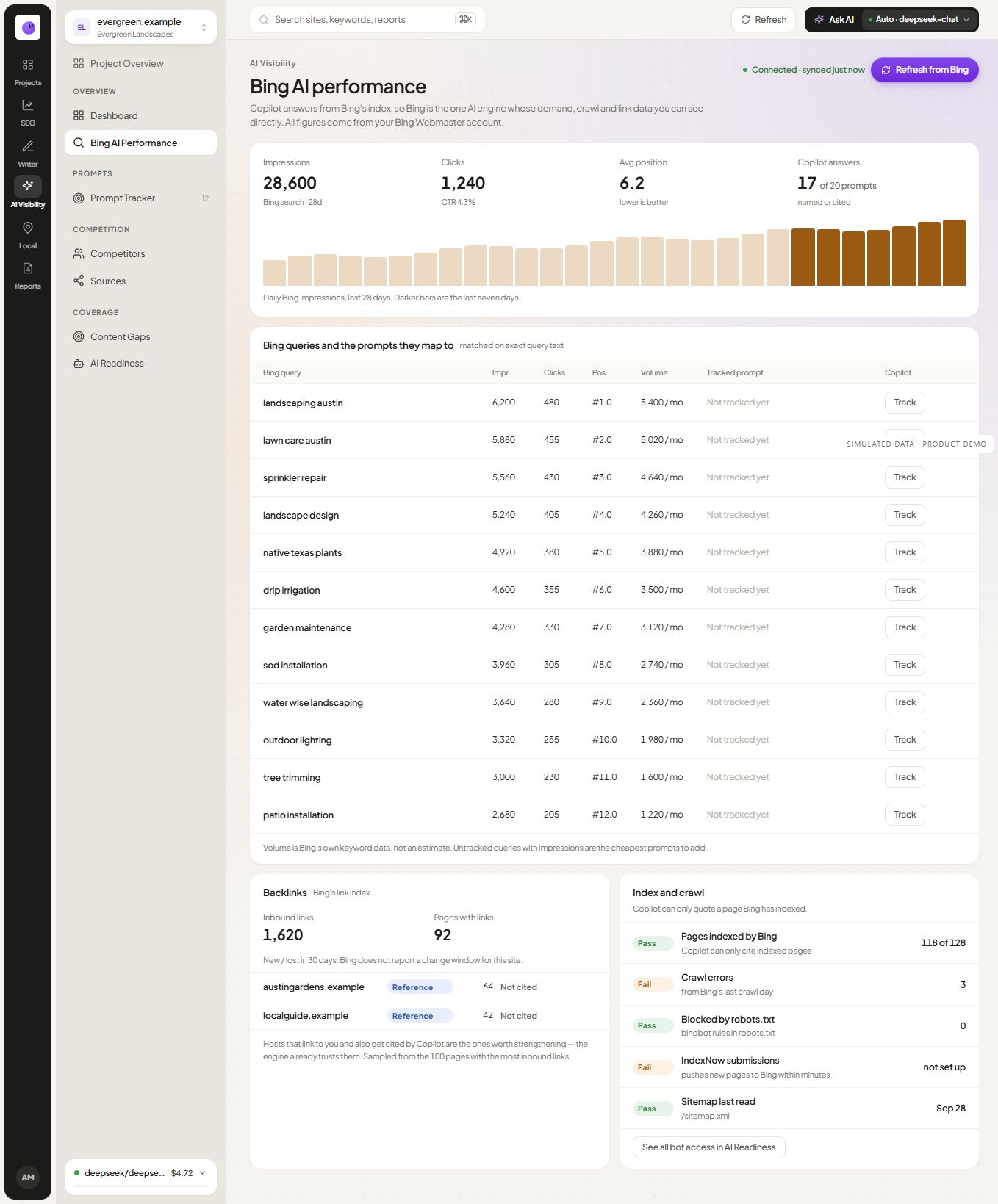
Inspect the changed page, rerun the relevant check and note the date. Use rank tracking as one observation alongside search clicks and useful on-site actions. Record concurrent changes so later reports do not imply unsupported causation.
A practical first cycle
- Choose one commercially important page.
- Verify the issue on the page itself.
- Assign one bounded change and an owner.
- Confirm the change in production.
- Revisit performance after enough comparable data is available.
Use the audit report template to document the work. Explore the reporting workflow when it is time to explain progress.