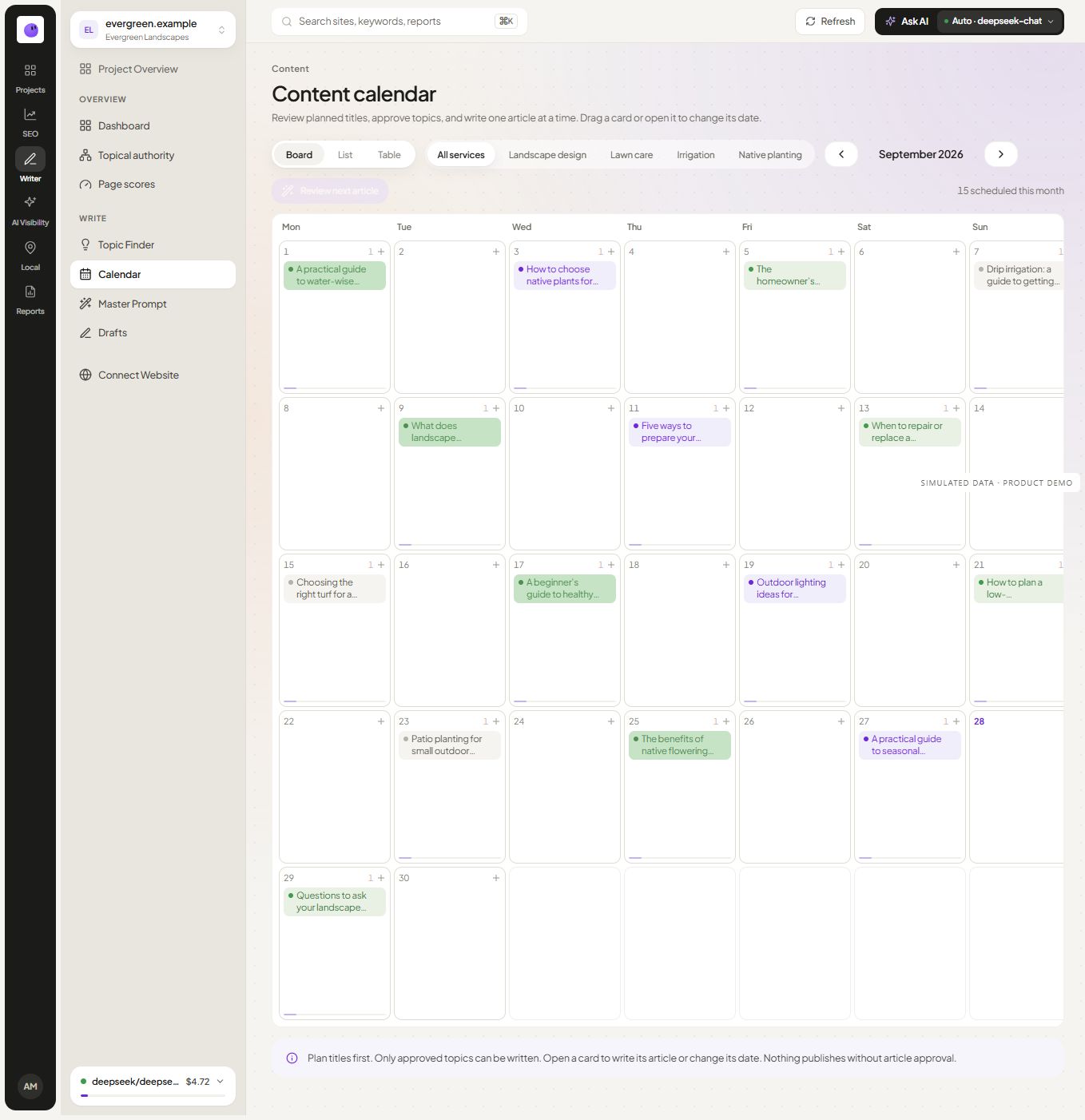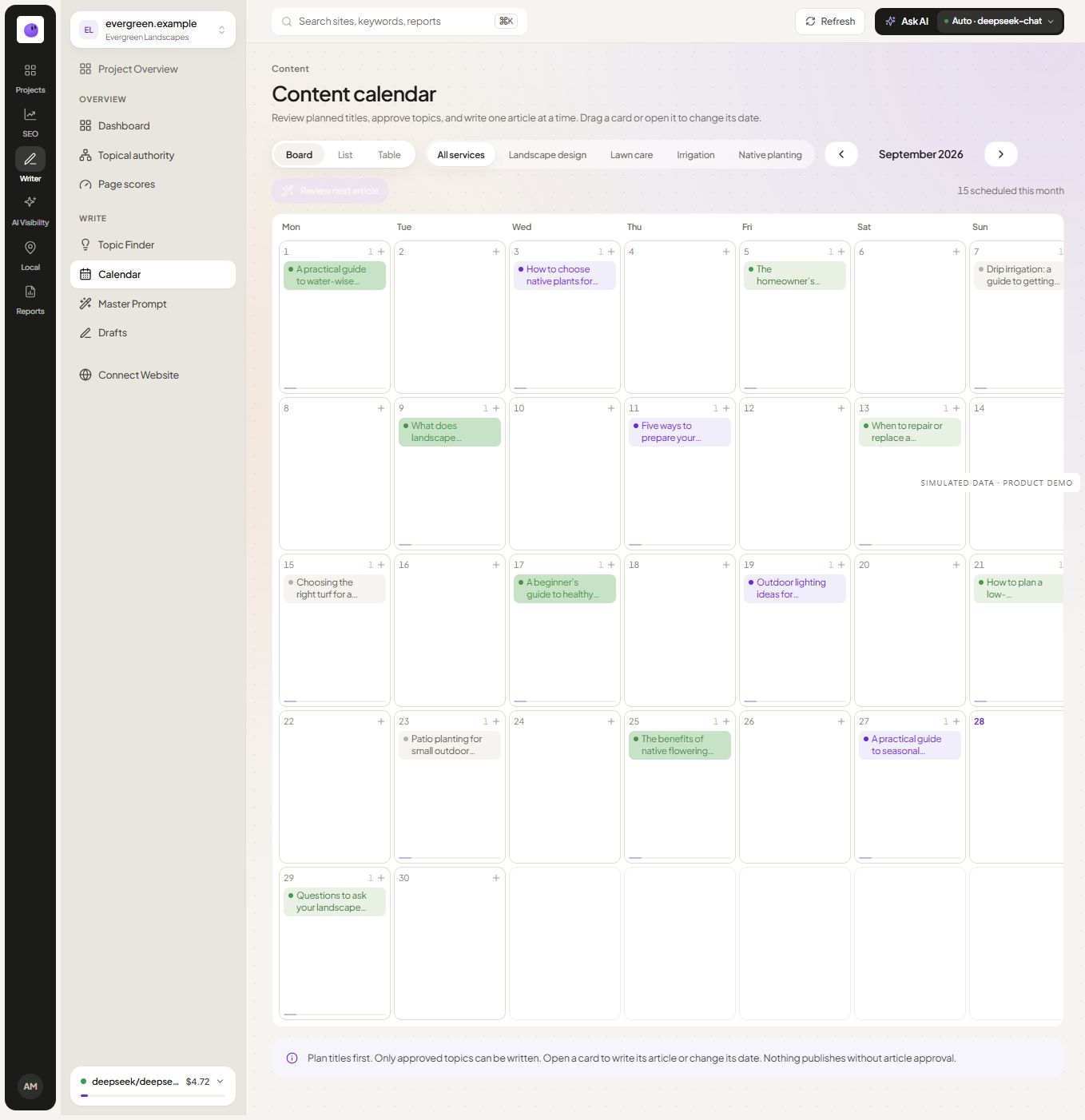
Publishing and indexing are separate events. You can control the quality and accessibility of a release; a search engine decides which eligible pages it indexes and shows.
Define the reason for each URL
Give every page a one-sentence purpose and an intended reader action. A tool performs a task, a guide explains a method and a comparison helps choose between options. Several keyword variants may belong to one page when they ask for the same result.
Before assigning a new URL, inspect what already exists. Expand a useful page when it can answer the question coherently. Split content when the reader's task is genuinely different and each resulting page can stand on its own.
Build the first batch around a complete journey
For an SEO reporting product, an initial batch might contain a reporting guide, a working report template, an agency solution page and a reporting feature explanation. Link them where the reader benefits from moving to the next step.
That four-page example is a planning choice, not a search-engine recommendation. A team with two reviewable assets should publish two useful assets rather than pad the batch.
Make release readiness explicit
Before a page is public, verify its answer, product claims, examples, source links and next action. A tool needs a working form and honest failure states. A template needs an accessible file. A comparison needs current evidence and a disclosed method.
Inspect the rendered page on desktop and mobile. Confirm the title, canonical, intended indexing directive and internal links. Keep draft routes out of the public sitemap until their release gate is satisfied.
Avoid scaled repetition
Changing a city, adjective or competitor name across a common paragraph does not create distinct value. Hundreds of similar pages can make the site harder to maintain and leave readers without the answer they expected.
Google's spam policies address scaled content abuse based on manipulative, low-value production, regardless of how the content is made. Use automation for repeatable work while preserving a genuine purpose and evidence for every page.
Use existing pages as the starting structure
Before adding a new URL, inspect the page already receiving relevant search impressions and its current purpose. If it answers the same question, improve it in place and preserve useful sections and links. A new keyword variation alone is insufficient reason to create a competing page.
Connect a genuinely new asset from the existing paragraph where it helps the reader continue. A reporting guide can introduce a usable template; an audit explanation can point to the worksheet used to record findings. Then link the new asset back to the method when that context helps. Avoid replacing a whole existing body without checking which useful connections would be lost.
Release, discover and monitor
Link the new pages from relevant existing content and navigation. Add the preferred public URLs to the sitemap. Record the release date and inspect the resulting pages for shared template defects.
Monitor discovery, indexing observations, impressions and useful user actions with the appropriate tools. Diagnose widespread exclusions or broken output before releasing another batch. Do not change publication dates merely to create an appearance of freshness.
Expand only when the next pages add something
Choose follow-up content from reader questions, support needs and search evidence. A supporting article should offer a distinct explanation or example. A pricing page should help a buyer understand actual costs. A case study should document real work and outcomes.
Keep a backlog, but do not treat the backlog as automatic publishing instructions. Product changes and new evidence may make some proposed pages unnecessary.
Use the content workflow to organize topics and approvals. Follow the technical audit checklist for implementation checks and the reporting guide to assess the result.
Is there a safe number of pages to publish each day?
There is no universal quota that makes a weak page useful or guarantees indexing. Choose a release size you can review, support and maintain.
Should I publish hundreds of pages at once if the drafts are ready?
Draft readiness is only one condition. Verify product functionality, assets, factual claims, rendering and discovery first. A staged release makes shared defects easier to catch before they affect the whole collection.
Continue your workflow
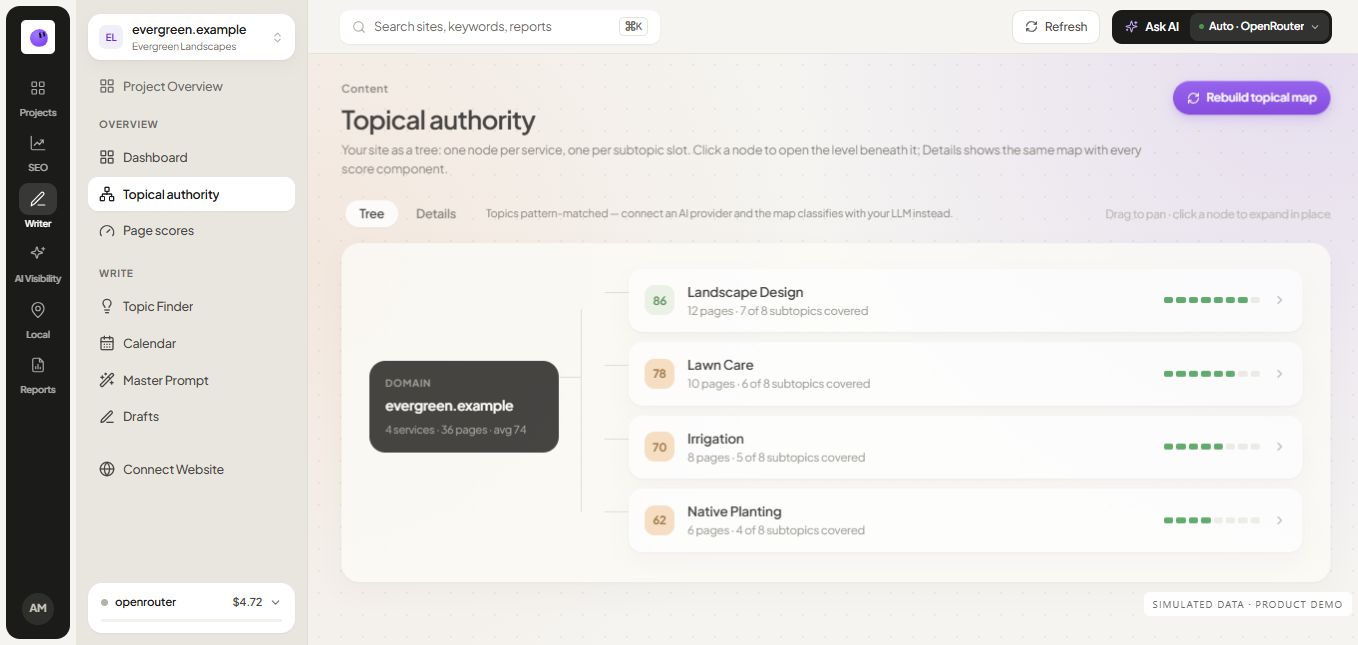 Simulated data
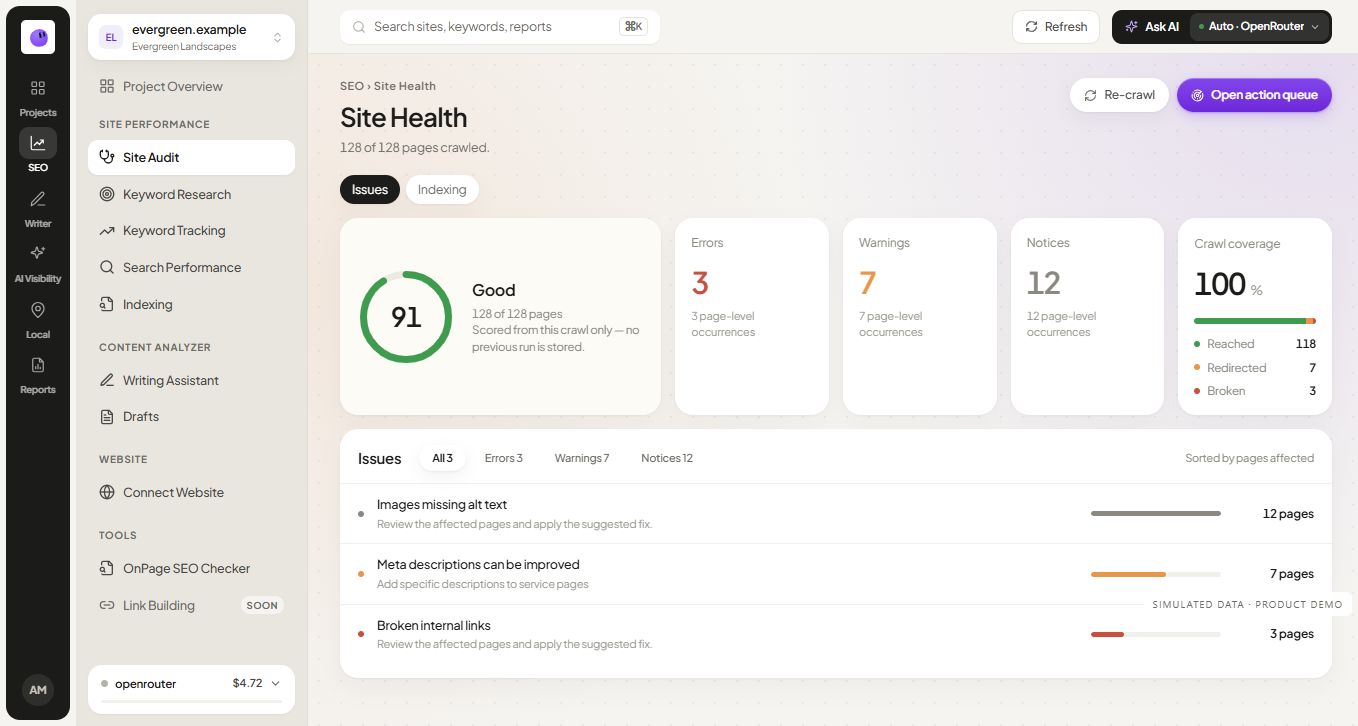 Simulated data