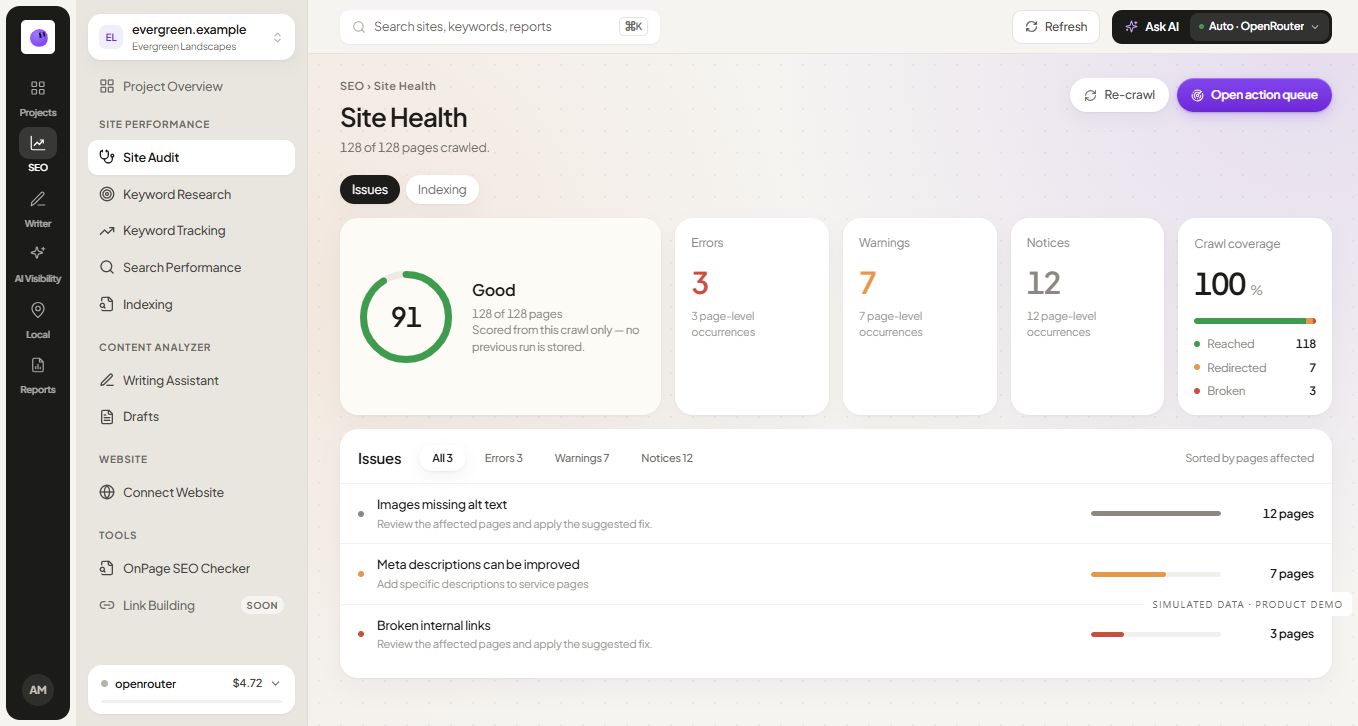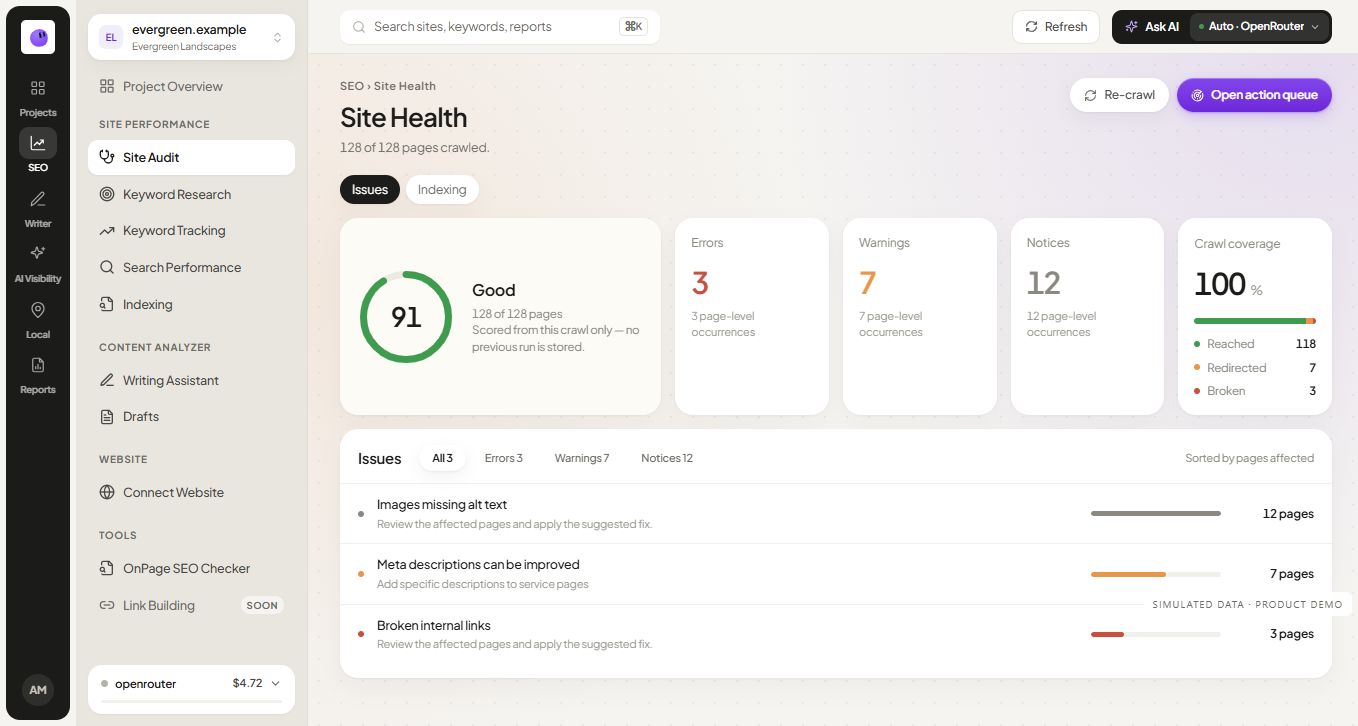
The useful question is what changed behind the number. Open the findings and inspect the pages before deciding what work to do.
Why different tools give different scores
Tools can inspect different page sets, use different retrieval methods and assign different weights. One may examine a single submitted URL, while another crawls the website. Some checks rely on source HTML; others use a rendered page or connected accounts.
A score of 82 in one product is therefore not directly comparable with 82 in another. Even within one tool, a changed crawl scope or scoring model can break the comparison with an older report.
How a score can rise without a business improvement
Consider a fictional tool with 100 equally weighted checks. A site passes 80 and receives 80/100. Fixing ten minor metadata checks raises the score to 90/100. Meanwhile, a broken inquiry form remains outside that tool's checklist.
The improvement is real within the invented scoring system, but it says nothing about the form. This example illustrates why you need to understand coverage. It is not the RankZap scoring formula.
The reverse can happen too. Repairing one serious problem may produce only a small score movement. The result can still be important if visitors can once again complete a valuable task.
Compare like with like
Record the crawl date, included URLs, limits, settings and failed requests. Keep these stable when comparing runs. If the site gains a large new section, explain the changed scope instead of interpreting the entire score difference as deterioration.
Missing data deserves a visible status. A page that could not be retrieved has not passed the checks. If the tool excludes failures from its denominator, understand and disclose that behavior when presenting the result.
Use findings to choose the work
Start with access, functionality and the reader's task. Confirm the finding, identify its scope and define a verification step. A duplicated template problem may have one shared fix, while a single affected lead page can require urgent attention.
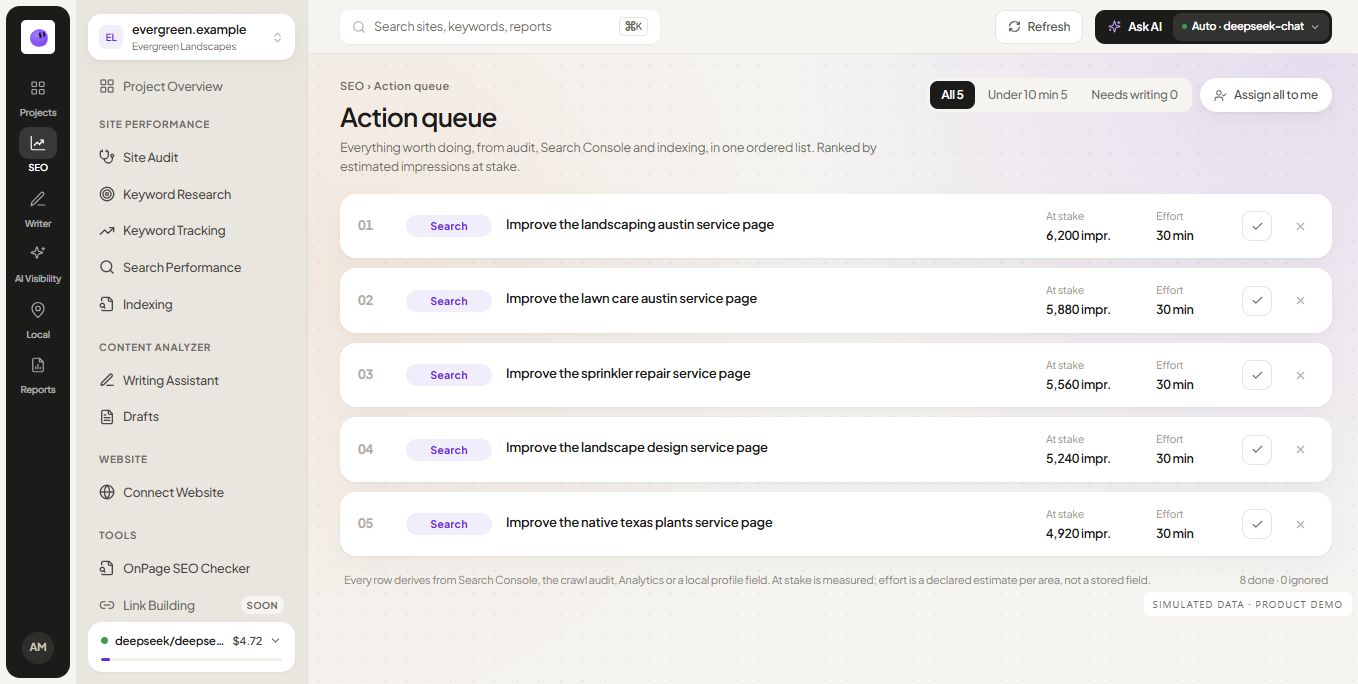
Use the prioritization guide to turn observations into a queue. Keep the detailed evidence in the audit worksheet.
Write a more useful client explanation
Instead of “Your SEO improved by 12%,” say what the source establishes. For example: “The audit score rose from 72 to 84 under the same crawl settings. The team repaired the shared navigation destination and corrected the canonical output on the service template. We verified both changes on the live pages.”
Those figures are illustrative. They describe score points, not a measured increase in organic performance. Traffic, qualified inquiries and other business outcomes need their own evidence.
Is 100/100 a useful goal?
Only if every remaining check represents appropriate, valuable work. Do not remove an intentional behavior or pad a useful page just to clear a warning.
Can a score predict how much traffic I will get?
An audit score alone cannot establish demand, relevance or competitive results. Use it as a summary of its defined checks and review actual performance separately.
For the complete investigation process, follow the technical SEO audit checklist.
Continue your workflow
 Simulated dataSimulated data