Explore local reporting · See the local SEO module
Start with the correct business location
Confirm that the selected public listing or Maps link refers to the intended business. Similar names, moved locations or multiple branches can otherwise introduce the wrong context before the analysis begins.
Keep the website and location relationship clear. If a business has several locations, record which landing page and service area the report concerns. A single national website metric may not explain the experience of one location.
Explain the source of local observations
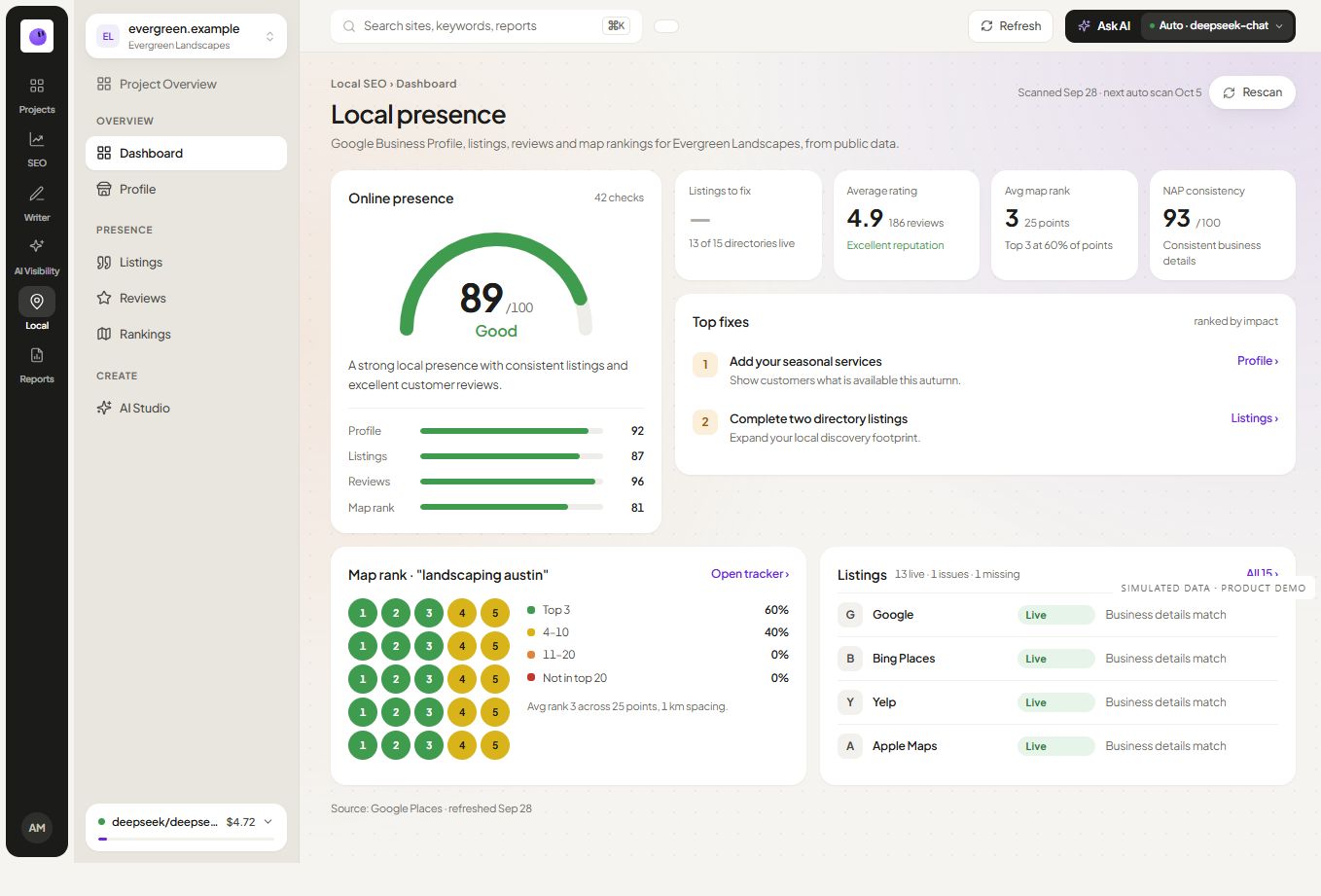
The current public product describes local work based on available public listing and map information. Direct Google Business Profile account access is not currently enabled. Do not assume that private profile performance measures or account-management actions are included.
Review what each source actually provides. A public review observation, a map result and an Analytics inquiry event are different kinds of evidence. Keep the labels and dates attached when using them in a client report.
Use a map grid as a defined sample
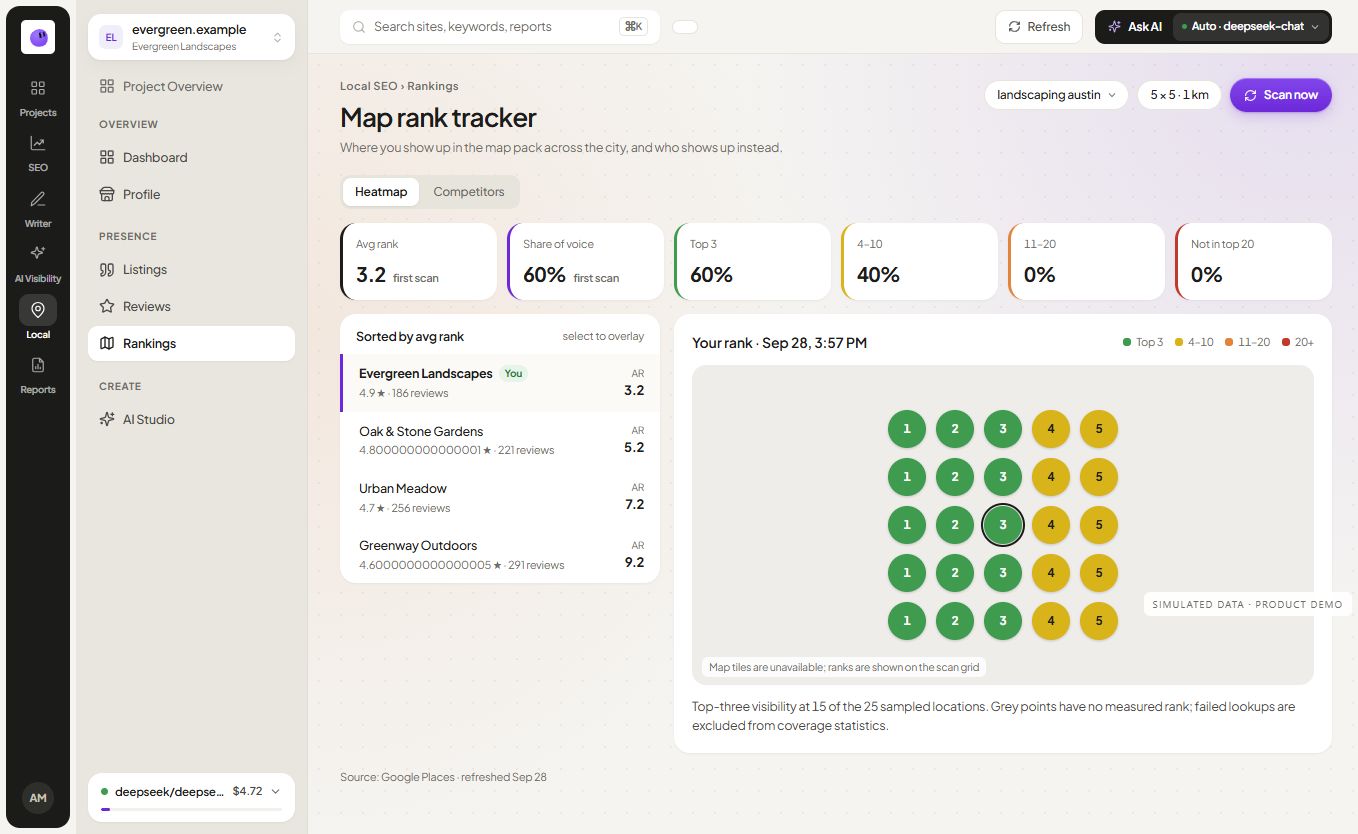
Local rank tracking can show how map results vary across selected points. Retain the keyword and grid settings so another person can understand the check. Avoid reducing a geographic sample to a single unqualified “local rank.”
Illustrative situation: A business appears more prominently near its address than at the edge of the sampled area. That pattern may guide further investigation, but it does not by itself prove a listing defect or predict lead volume.
Connect observations with practical work
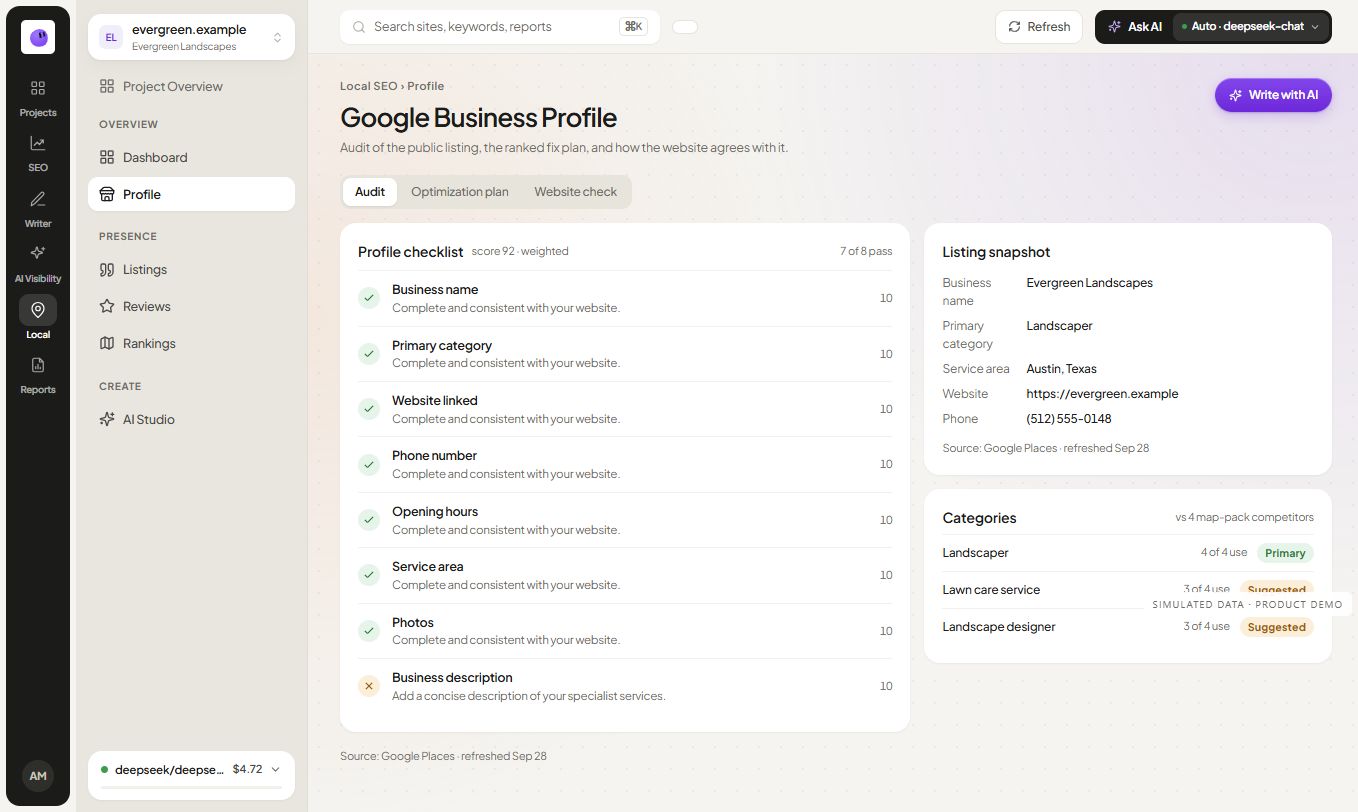
Inspect relevant location pages, service explanations and contact details alongside the local evidence. A public listing and the website should give customers a consistent understanding of the business. Use the SEO audit for website issues that can affect those pages.
Keep the next action specific: verify a location detail, improve an unclear service explanation or inspect a broken contact route. The audit worksheet can record the owner and verification step.
Keep three local evidence sources separate
| Evidence | Question it can support | What it does not establish |
|---|---|---|
| Public listing details | Is the visible business identity consistent? | Owner-only profile interactions |
| A local rank sample | Where did the business appear under the sampled settings? | Every customer's result across the whole city |
| Verified website inquiries | What actions were recorded on the site? | Which particular map observation caused the action |
For more than one location, keep a stable location identifier, source scope and reporting period. A combined portfolio total can be useful, but the individual location needs enough detail for a local manager to act. Do not reuse one site's observations as evidence for another location.
Frequently asked questions
Does RankZap manage my Business Profile account?
The current public offer says direct Business Profile account access is not enabled. Confirm available capabilities in the product rather than assuming that public listing analysis includes account management.
Does the product distribute directory citations?
Do not assume that it does. The reviewed product brief does not establish directory distribution or listing synchronization. Keep those services separate unless a supported, verified capability is released.
Can I include local observations in a client report?
Use available reporting sections and explain their source and scope. A defined map sample should remain distinguishable from website traffic and customer inquiries.
Which plan should I choose?
Review current plan limits for the locations, grid options and usage relevant to your work. Choose the scope you can review consistently.