This comparison is published by RankZap. It uses our product scope and SE Ranking's public integration documentation reviewed October 1, 2026. We have not performed a hands-on accuracy, coverage or performance benchmark of both products.
Start with the required data path
SE Ranking documents connections between its SEO data, analytics sources and reporting destinations. Its integrations overview describes several workflows to investigate.
If an external reporting destination is mandatory, confirm the exact fields, refresh behavior and plan required. An integration listing does not establish that every metric or historical period is available.
Review the project workflow in RankZap
RankZap connects audit findings, keyword work, content planning and client reporting around a website. Explore the SEO module and content module to understand the intended sequence.
Confirm the sources, markets and usage limits needed for your project. Do not assume two products use the same ranking provider, keyword database or AI retrieval method simply because their navigation contains similar labels.
Compare results only under comparable conditions
Use the same keyword, location, device and time context for a ranking investigation. For an audit, compare the page set and retrieval scope. For AI visibility, identify the actual source, prompt and run status.
When outputs differ, investigate the definitions before naming a winner. A metric with the same label can have a different denominator, coverage or update schedule.
Include the work outside the software
Time the preparation, review and handoff for one representative deliverable. Record any additional connector, export or manual correction. Check the current plan and renewal terms at the source.
Use RankZap's pricing page for its current packaging and confirm SE Ranking's current offer directly. This page does not claim that either product is universally cheaper or more accurate.
Make a documented choice
Choose the product whose verified scope covers your mandatory requirements and whose workflow your team can maintain. Keep unresolved questions visible until the test answers them.
For a broader shortlist, read SEO reporting tools compared. Use the report template to keep the deliverable consistent during evaluation.
Decide which SEO data you need to carry forward
For an SE Ranking comparison, list the datasets that make the current workflow useful: tracked keywords, country and device settings, historical positions, audited URL scope and the fields consumed by reports. A replacement must support the required task, even if its dashboard is organized differently.
Use a small fixed keyword set to check the ranking workflow. Record the query, location, device, observation date and tracked landing page. Keep an unsuccessful collection separate from an observed position outside the reported range. If the products disagree, investigate these settings before treating the difference as an accuracy verdict.
For a reporting integration, verify the actual destination and fields your team uses. Save a representative output and identify which transformations or manual steps sit between the source and the client report. Compare that complete workflow with the candidate setup.
Finally, document how much historical context can be retained or exported through supported means. Do not promise that switching products automatically migrates historical rank data. Evaluate RankZap against the data and follow-up work you actually need, then price that verified scope.
Continue your workflow
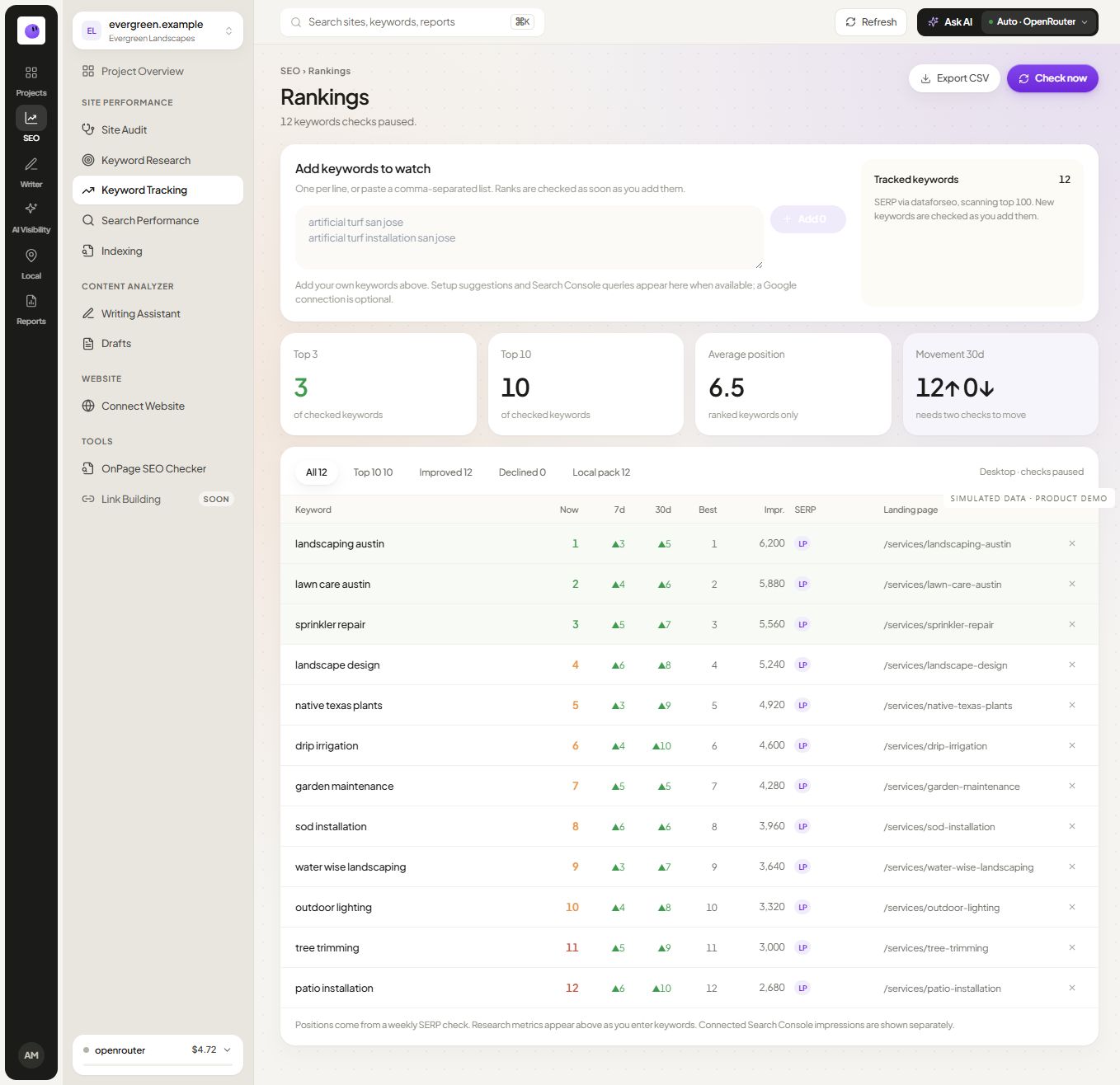 Simulated data
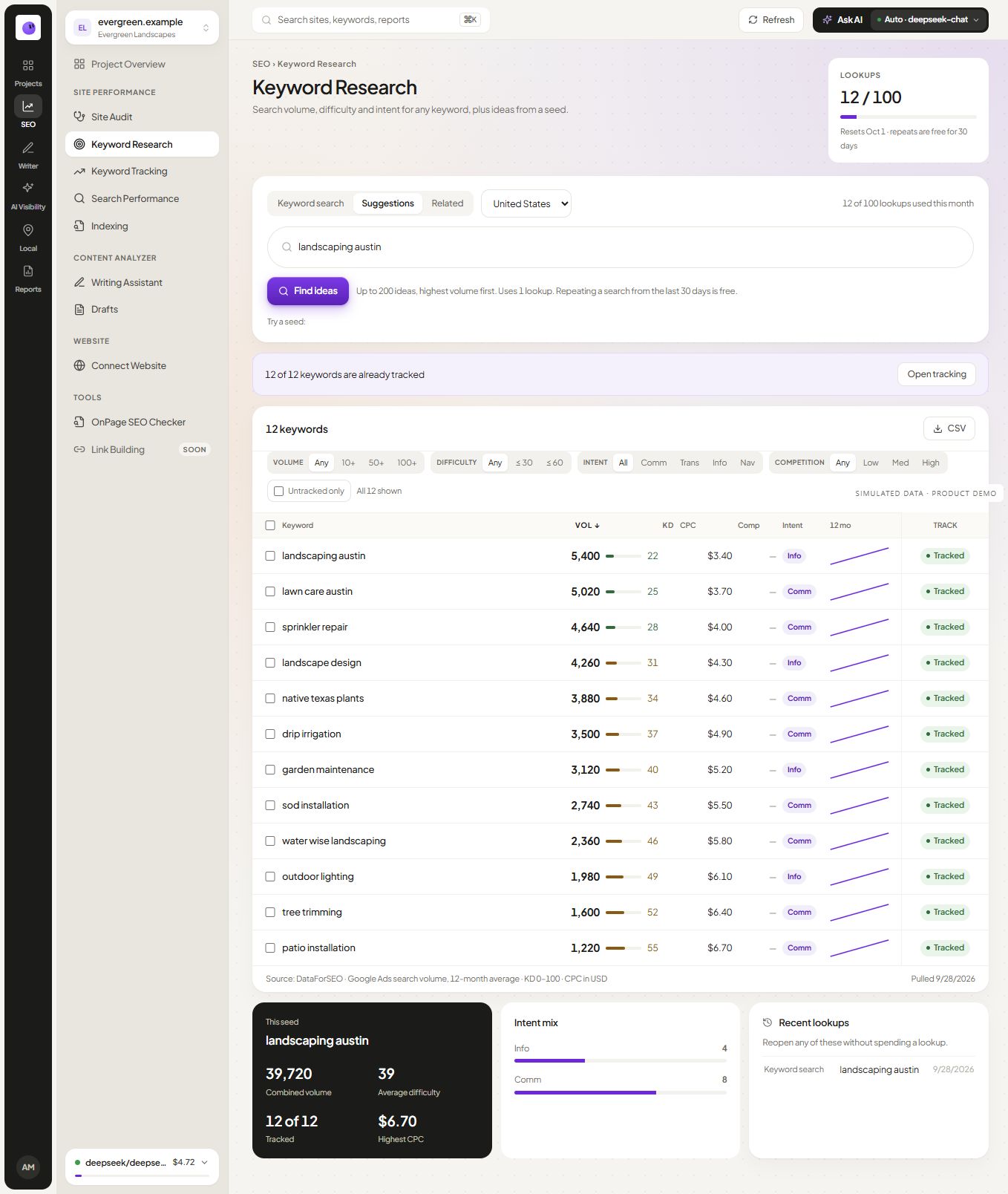 Simulated data